


Medically reviewed by Dr. Thirumagal, MS (OG), LIVF Fertility & Women’s Healthcare · Updated October 2026
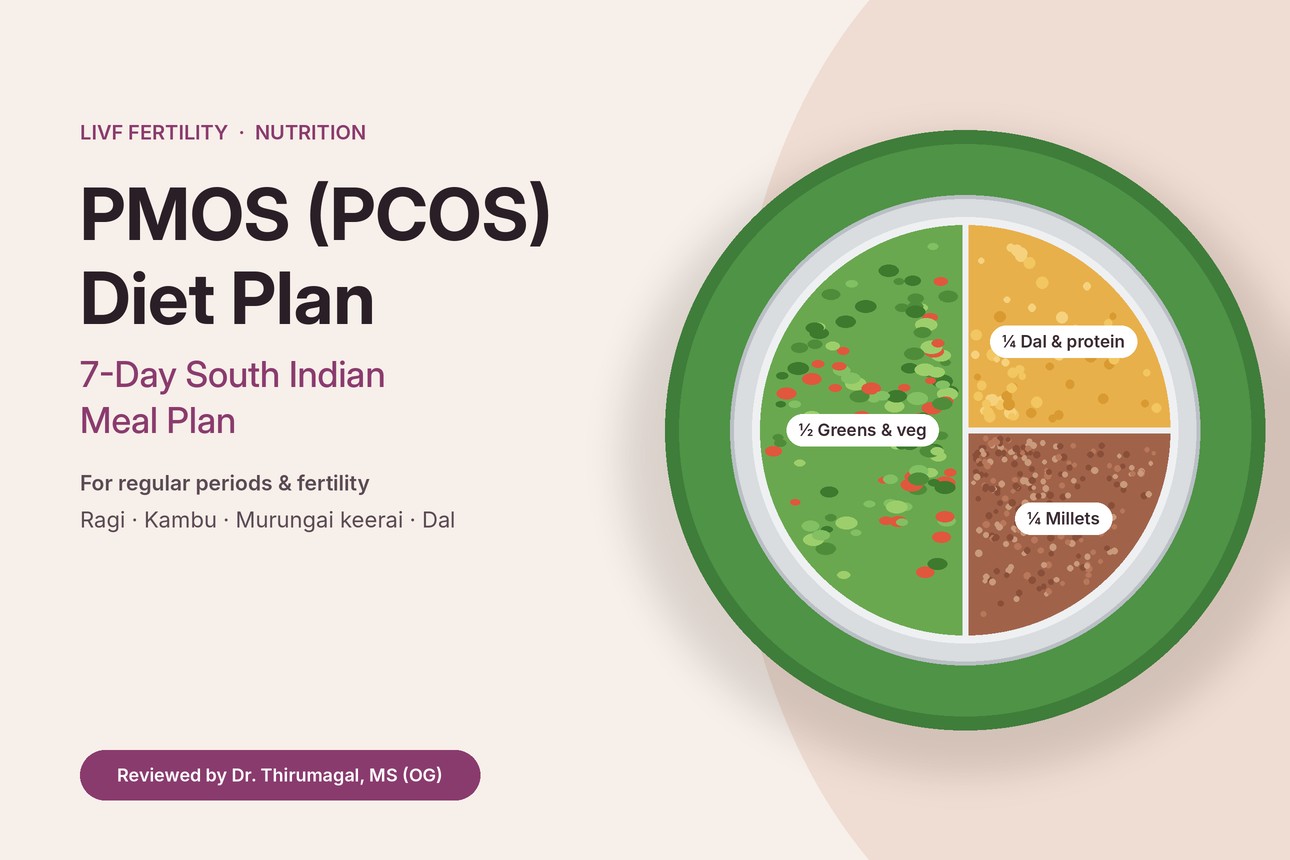
Quick answer: The best diet for PMOS (formerly PCOS) is a balanced, high-fibre, low-glycaemic plate: half vegetables and greens, a quarter protein (dal, eggs, fish, paneer, sprouts) and a quarter whole grains like millets or hand-pounded rice. Cutting down sugar, maida and fried snacks helps control insulin. Losing even 5–10% of body weight, if you are overweight, can bring back regular ovulation for many women.
What is PMOS, and why does diet matter?
In May 2026, PCOS was officially renamed PMOS – Polyendocrine Metabolic Ovarian Syndrome, after a global consensus published in The Lancet. The new name makes one thing clear: this is a hormonal and metabolic condition, not just a problem of “cysts” in the ovaries. (Read more: PCOS Renamed to PMOS: What Every Woman Must Know.)
The “metabolic” part is where food comes in. Most women with PMOS have some degree of insulin resistance. When insulin stays high, the ovaries make more male hormones (androgens), which can stop ovulation and cause irregular periods, acne, hair fall and weight gain around the waist. Food choices that keep blood sugar steady can lower this insulin load. (See also: Insulin Resistance and Fertility.)
The 2023 International Evidence-based Guideline for PCOS does not recommend one “special” PCOS diet over another. What works is a healthy, balanced eating pattern that you can follow for months, not weeks. A South Indian kitchen already has most of what you need.
What should I eat if I have PMOS (PCOS)?
Build each meal on this simple plate:
| Part of the plate | What to put there | South Indian examples |
|---|---|---|
| ½ plate | Vegetables and greens | Murungai keerai (moringa leaves), arai keerai, beans, avarakkai, vendakkai, cabbage, cucumber |
| ¼ plate | Protein | Dal, sambar, sundal, sprouts, eggs, fish, chicken (not fried), paneer, curd |
| ¼ plate | Whole grains | Ragi, kambu (pearl millet), thinai (foxtail millet), kuthiraivali, hand-pounded or red rice |
| Small amount | Healthy fats | Gingelly oil (nallennai), groundnuts, ellu (sesame), a few almonds or walnuts |
Foods that help most
- Millets (ragi, kambu, thinai, samai): more fibre than white rice, so blood sugar rises more slowly.
- Pulses and legumes (kollu/horse gram, pasi payaru/green gram, kondakadalai/chickpea): protein plus fibre in one food.
- Greens: murungai keerai and other keerai are rich in iron and folate, which matter before pregnancy.
- Seeds: ellu (sesame) and flax seeds add healthy fats and fibre.
- Curd and buttermilk (mor): good protein; choose plain, unsweetened.
- Whole fruits: guava, apple, orange, papaya, pomegranate. Eat the fruit, not the juice.
Which foods should I cut down with PMOS?
You don’t have to give up rice or sweets forever. Reduce how often and how much:
- Sugar and sweets: sugar in tea/coffee, sweets, biscuits, packaged juices and soft drinks.
- Maida items: parotta, white bread, bakery puffs, cakes.
- Deep-fried snacks: bajji, bonda, vadai, chips, mixture. Keep them for occasional days.
- Large portions of white rice: if you eat rice, take a smaller portion with more sambar, kootu and poriyal, or switch some meals to millets.
- Sweetened “health drinks” and flavoured yoghurts, which often have a lot of added sugar.
7-day South Indian PMOS meal plan
This plan is a sample for a woman with PMOS who wants regular periods and is planning a pregnancy. Portions depend on your weight, activity and blood tests, so ask your doctor or dietitian to adjust it for you.
| Day | Early morning | Breakfast | Mid-morning | Lunch | Evening | Dinner |
|---|---|---|---|---|---|---|
| Mon | Warm water + 5 soaked almonds | 2 ragi dosai + sambar + mint chutney | 1 guava | Thinai rice + keerai kootu + fish curry or dal + cucumber salad | Sundal (½ cup chickpea) + green tea | 2 phulka + paneer or egg bhurji + vegetable poriyal |
| Tue | Methi (fenugreek) water | Vegetable oats upma + 1 boiled egg or curd | Buttermilk | Red rice (small cup) + sambar + beans poriyal + curd | Roasted groundnuts (a handful) | Kambu dosai + tomato chutney + sambar |
| Wed | Warm water + 2 walnuts | Pesarattu (green gram dosai) + ginger chutney | 1 apple | Kuthiraivali pongal + vegetable kootu + raita | Sprouts salad | Millet idli (3) + sambar + 1 egg or tofu |
| Thu | Methi water | Ragi koozh (unsweetened) with mor + onion | 1 orange | Brown/red rice + rasam + chicken or kollu curry + cabbage poriyal | Ellu urundai (1 small, jaggery) + tea without sugar | Vegetable adai + avial (less coconut) |
| Fri | Warm water + 5 soaked almonds | 2 wheat or millet dosai + kara chutney + sambar | Papaya (1 cup) | Samai rice + keerai masiyal + fish fry (shallow, not deep) + salad | Buttermilk + roasted chana | 2 phulka + dal + mixed vegetable curry |
| Sat | Methi water | Vegetable upma (thinai/rava) + curd | 1 guava | Millet biryani (vegetable or chicken) + raita | Sundal (pasi payaru) | Ragi idiyappam + vegetable stew |
| Sun | Warm water + 2 walnuts | 2 idli + 1 egg or paneer + sambar | Pomegranate (½ cup) | Regular family meal: smaller rice portion, extra kootu and poriyal | Coconut water or green tea | Light dinner: oats or millet kanji + vegetable poriyal |
Tips that make the plan work – Finish dinner 2–3 hours before sleep. – Drink 2–2.5 litres of water a day. – Walk 30 minutes a day, most days. Food and movement together work better than either alone. – Keep one “free” meal a week so you can stay with the plan for the long term.
Can diet alone treat PMOS and help me get pregnant?
For some women, especially those who are overweight, diet and exercise alone bring back regular cycles. Guidelines note that losing 5–10% of body weight can improve ovulation and pregnancy chances. For a 70 kg woman, that is just 3.5 to 7 kg.
But diet is not a full treatment for everyone. Many women with PMOS also need medicines for ovulation, insulin or hormones, and some need fertility treatment such as ovulation induction, IUI or IVF. Lean women with PMOS can have the condition too, and for them the focus is on food quality, not weight loss.
When should I see a doctor?
See a gynaecologist or fertility specialist if:
- your periods come more than 35 days apart, or you get fewer than 8 periods a year,
- you have been trying to conceive for 12 months (or 6 months if you are over 35),
- you have acne, excess facial hair or hair fall along with irregular periods,
- you have dark patches on the neck or armpits (a sign of insulin resistance).
A simple set of tests (hormones, blood sugar, insulin, thyroid, AMH and a pelvic scan) can confirm PMOS and guide treatment. At LIVF, you can book a PCOS/PMOS check-up at our Perungudi or T Nagar centre.
Frequently asked questions
Is rice bad for PMOS (PCOS)? No. Rice is not banned. Take a smaller portion, choose red or hand-pounded rice when you can, and fill the rest of the plate with vegetables, dal and curd so the meal raises blood sugar more slowly.
Which millet is best for PCOS? Ragi, kambu, thinai and samai are all good choices. The best one is the one you will eat regularly. Rotate them through the week.
Can I drink milk and tea with PCOS? Yes. Plain milk, curd and buttermilk are fine. The bigger problem is the sugar added to tea and coffee, so slowly reduce it to none.
How long does it take for diet to improve PCOS symptoms? Many women notice better energy within a few weeks. Changes in periods and ovulation usually take about 3 to 6 months of steady eating and exercise.
Is methi (fenugreek) water good for PCOS? Methi seeds have fibre that may help blood sugar control, and it is safe for most women as part of a normal diet. It is a helpful habit, not a cure, and does not replace medical treatment.
Should my husband follow the same diet when we are trying to conceive? Yes, it helps. A balanced, low-sugar diet supports sperm quality too, and it is easier to stick to a plan when the whole family eats the same food. Read: Foods That Naturally Boost Fertility for Men and Women.
The bottom line
PMOS is a long-term hormonal and metabolic condition, and food is one of the strongest tools you have to manage it. A South Indian plate built on millets, dal, greens and curd, with less sugar and maida, can help steady insulin, regulate periods and prepare your body for pregnancy. If your periods are still irregular after 3 to 6 months, or you are struggling to conceive, talk to a fertility specialist.
Planning a pregnancy with PMOS? Book a consultation at LIVF Fertility – Perungudi, Chennai · +91 78787 84079
References
- Teede HJ, et al. Recommendations from the 2023 International Evidence-based Guideline for the Assessment and Management of Polycystic Ovary Syndrome. Fertility and Sterility / Human Reproduction / JCEM, 2023. Monash University.
- Global consensus on renaming PCOS to Polyendocrine Metabolic Ovarian Syndrome (PMOS). The Lancet, May 2026.
- World Health Organization. Polycystic ovary syndrome – Fact sheet. who.int
- ICMR–National Institute of Nutrition. Dietary Guidelines for Indians, 2024.
- Moran LJ, et al. Lifestyle changes in women with polycystic ovary syndrome. Cochrane Database of Systematic Reviews.
This article is for general information and does not replace advice from your doctor.

