Medically reviewed by Dr. Thirumagal, MS (OG), LIVF Fertility & Women’s Healthcare · Updated October 2026
Quick answer: After embryo transfer, eat simple, home-cooked, balanced meals: dal, eggs, curd, vegetables, whole grains, fruits and plenty of water. No single food can make an embryo implant, so focus on food safety and comfort. Avoid alcohol, smoking, raw or undercooked food, unpasteurised dairy and too much caffeine, and keep taking the medicines and folic acid your doctor prescribed.
Does diet after embryo transfer affect IVF success?
This is the question almost every couple asks. The honest answer: there is no “magic” food that makes implantation happen. Whether an embryo implants depends mostly on the embryo itself, the lining of the uterus and your hormones, which your fertility team monitors and supports with medicines.
What food can do during the two-week wait is:
- give your body steady energy and protein,
- reduce side effects of progesterone such as constipation and bloating,
- keep you safe from food infections, which matter more if you become pregnant,
- support an early pregnancy with folate, iron and other nutrients.
So think of this phase as “eating like you are already in early pregnancy.” (New to IVF? Read First IVF Consultation: What Questions Should You Ask?)
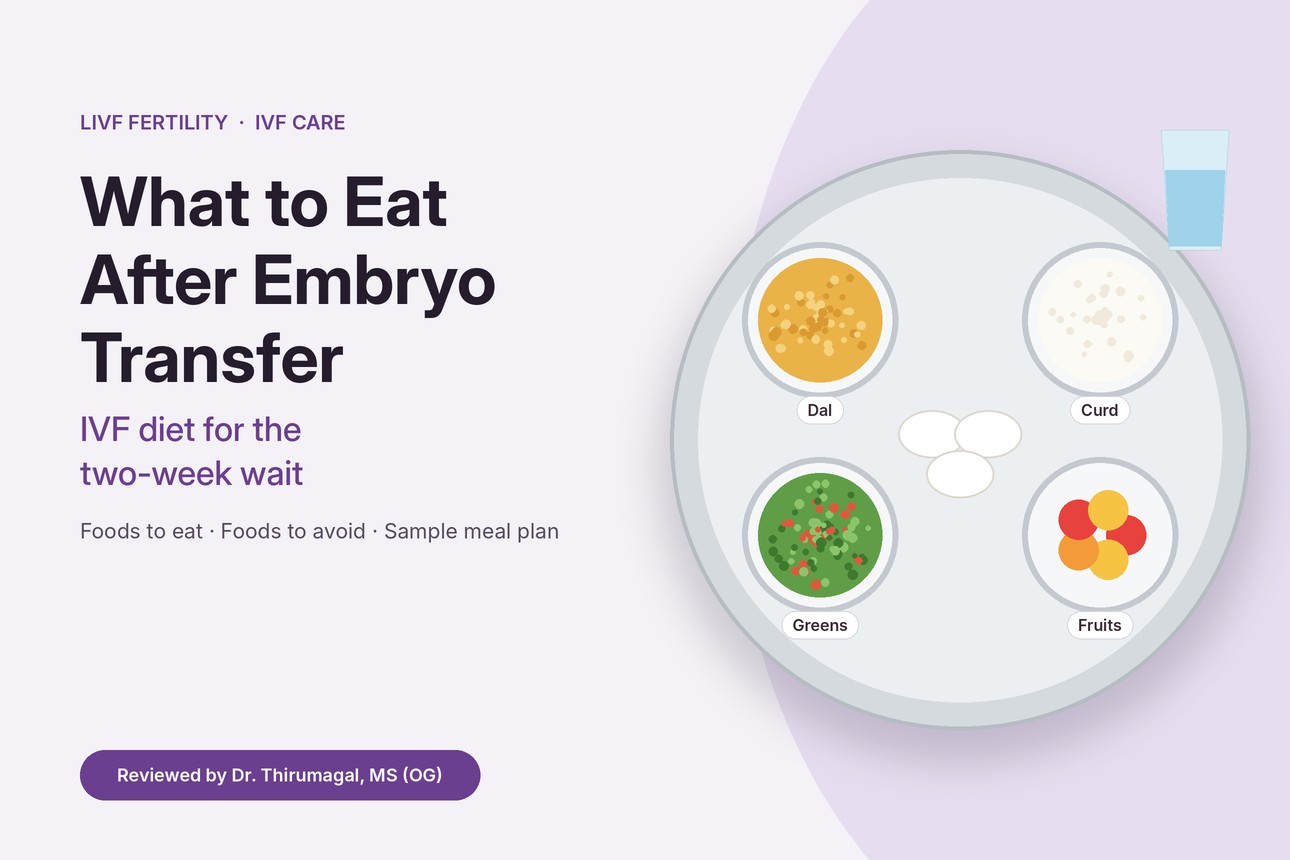
What should I eat after embryo transfer?
| Food group | Why it helps | Simple Indian choices |
|---|---|---|
| Protein | Supports healing and early pregnancy needs | Dal, sambar, sundal, eggs, paneer, curd, well-cooked fish or chicken |
| Whole grains | Steady energy, fibre for constipation | Hand-pounded or red rice, ragi, millets, wheat phulka, oats |
| Vegetables and greens | Folate, iron, fibre | Keerai, beans, carrot, beetroot, avarakkai, vendakkai, bottle gourd |
| Fruits | Vitamins and fibre | Banana, apple, orange, guava, pomegranate, sweet lime |
| Healthy fats | Fullness and nutrients | Nuts, seeds (ellu, flax), a little ghee or gingelly oil |
| Fluids | Hydration, less constipation | Water, buttermilk, tender coconut water, homemade soups, rasam |
Foods that help with common two-week-wait discomforts
- Constipation (very common with progesterone): more water, fruits, vegetables, millets, soaked raisins or figs, and a short walk after meals.
- Bloating: smaller, more frequent meals; less fried food; jeera or ginger in cooking.
- Low appetite or nausea: dry toast or idli in the morning, ginger tea without too much sugar, and small snacks every 2 to 3 hours.
Foods to avoid after embryo transfer
| Avoid or limit | Why |
|---|---|
| Alcohol and smoking (including second-hand smoke) | Harmful to an early pregnancy; avoid completely |
| Too much caffeine | Keep it under about 200 mg a day: roughly 1 to 2 cups of filter coffee or 2 to 3 cups of tea |
| Raw or undercooked eggs, meat and fish | Risk of salmonella, listeria and parasites |
| Unpasteurised milk and soft cheese from unknown sources | Listeria risk |
| Street food, cut fruits kept open, and pani puri | Hygiene and water safety |
| High-mercury fish (shark, swordfish, king mackerel/vanjaram in large amounts) | Mercury can affect a developing baby; choose smaller fish like sardine (mathi) or pomfret |
| Unripe or semi-ripe papaya | Many doctors advise avoiding it in early pregnancy |
| Herbal “fertility” powders, kashayams and supplements not prescribed | Unknown doses; some interact with IVF medicines. Ask your doctor first. |
| Very sugary and deep-fried foods | Bloating, acidity and blood-sugar spikes |
Is pineapple good after embryo transfer?
You will see many social media posts saying “eat pineapple core after transfer.” There is no good scientific evidence that pineapple helps implantation. A few pieces of ripe pineapple as a normal fruit are fine for most women, but you don’t need to eat it specially, and you shouldn’t take bromelain supplements without your doctor’s advice.
The same applies to other myths: ghee in large amounts, “heat” and “cold” foods, or avoiding all fruits. A normal, balanced home diet is enough.
Sample one-day South Indian meal plan for the two-week wait
This is a sample day. Change it to your taste, weight and any conditions like diabetes, thyroid or PCOS, and follow your doctor’s advice.
| Time | What to eat |
|---|---|
| Early morning | Warm water + 4 to 5 soaked almonds or 2 walnuts |
| Breakfast | 2 to 3 idli or ragi dosai + sambar + chutney, or vegetable upma + 1 boiled egg |
| Mid-morning | 1 fruit (guava, apple or orange) or a glass of buttermilk |
| Lunch | Small cup of red or hand-pounded rice + dal or sambar + keerai poriyal + vegetable kootu + curd |
| Evening | Sundal (chickpea or green gram) or roasted chana + tea/coffee (within your caffeine limit) |
| Dinner | 2 phulka or millet dosai + paneer, egg or dal curry + vegetable stew |
| Before bed (optional) | Warm milk (pasteurised) or 2 to 3 soaked figs if constipated |
Simple habits for the two weeks
- Drink about 2 to 2.5 litres of fluids a day, unless your doctor gives different advice.
- Eat every 3 to 4 hours instead of one or two big meals.
- Wash fruits and vegetables well, and eat freshly cooked food.
- Keep taking folic acid and all medicines exactly as prescribed.
Do I need bed rest after embryo transfer?
No. Studies have not shown that bed rest improves IVF results, and long bed rest can increase stiffness, constipation and anxiety. Most women can go back to light daily activities, short walks and desk work soon after transfer. Avoid heavy lifting, intense workouts and very hot baths until your doctor says otherwise. (Read more about Fertility and Mental Health for tips on handling the anxious wait.)
When should I call my fertility doctor?
Call your clinic straight away if you have:
- severe stomach pain or a fast-growing, tight, swollen tummy,
- breathlessness, very little urine, or vomiting that won’t stop,
- heavy bleeding,
- fever.
These can be signs of problems such as ovarian hyperstimulation (OHSS) or infection that need prompt care. Light spotting can be normal, but always tell your doctor.
Take the blood pregnancy test (beta hCG) on the day your clinic advises. Home urine tests done too early can give wrong results because of the trigger injection.
Frequently asked questions
Can I eat rice after embryo transfer? Yes. Rice is fine. Take a sensible portion, prefer red or hand-pounded rice when you can, and add dal, vegetables and curd so the meal is balanced.
Is coffee allowed after embryo transfer? Yes, in moderation. Keep total caffeine under about 200 mg a day, which is roughly 1 to 2 cups of filter coffee. Remember that tea, cola and chocolate also have caffeine.
Can I eat papaya and pineapple after embryo transfer? Avoid unripe or semi-ripe papaya. A few pieces of ripe pineapple as a normal fruit are fine for most women, but it does not improve implantation, so there is no need to eat it specially.
Should I eat more ghee or “hot” foods after transfer? No. A small amount of ghee is fine, but extra ghee or “body heat” foods do not affect implantation. Large amounts of rich food can cause acidity and weight gain.
Can I eat non-veg after embryo transfer? Yes. Well-cooked eggs, chicken and fish are good protein sources. Avoid raw or undercooked meat and limit high-mercury fish.
What should my husband eat during this time? His diet does not affect the embryo already transferred, but a healthy home diet together makes the two weeks easier, and it supports his health for the future. Read: Foods That Naturally Boost Fertility for Men and Women.
The bottom line
After embryo transfer, the best “IVF diet” is a calm, safe, balanced one: home-cooked South Indian meals with protein, whole grains, vegetables, fruits and enough water. Skip alcohol, smoking, raw food and excess caffeine, don’t chase special “implantation foods”, and stay in touch with your fertility team about any symptoms.
Going through IVF in Chennai? Our team at LIVF Fertility supports you through every stage, from IVF treatment to emotional support. Book a consultation at our Perungudi centre, behind World Trade Center, OMR · +91 78787 84079. We see patients from Perungudi, OMR, Thoraipakkam, Kandanchavadi, Velachery and nearby areas.
References
- Gaskins AJ, Chavarro JE. Diet and fertility: a review. American Journal of Obstetrics and Gynecology, 2018.
- Craciunas L, Tsampras N. Bed rest following embryo transfer might negatively affect the outcome of IVF/ICSI: a systematic review and meta-analysis. Human Fertility, 2016.
- American College of Obstetricians and Gynecologists. Moderate Caffeine Consumption During Pregnancy (Committee Opinion No. 462).
- ICMR–National Institute of Nutrition. Dietary Guidelines for Indians, 2024.
- U.S. Food and Drug Administration. Food Safety for Pregnant Women and Advice about Eating Fish.
This article is for general information and does not replace advice from your fertility doctor.