Medically reviewed by Dr. Thirumagal, MS (OG), LIVF Fertility & Women’s Healthcare · Updated November 2026
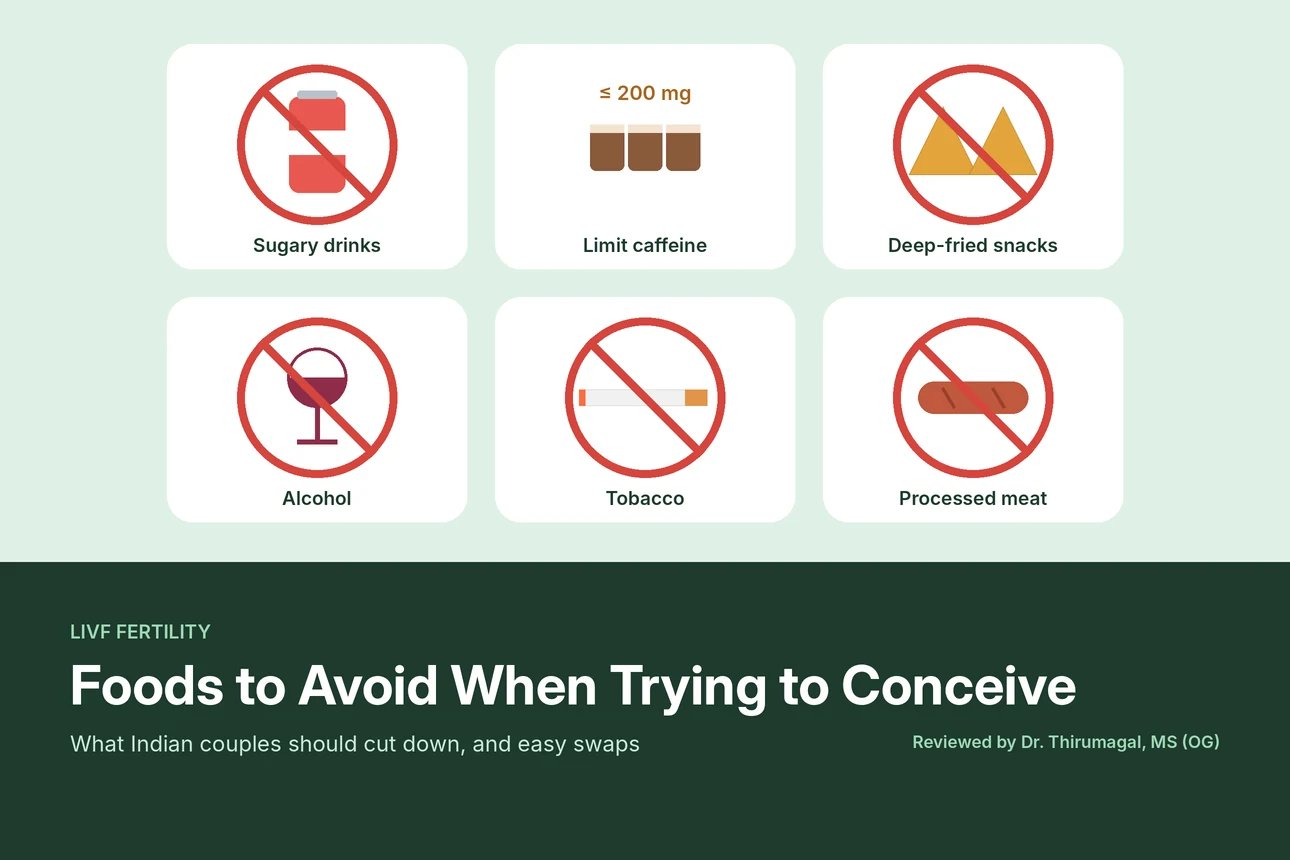
Quick answer: When you are trying to conceive, cut out alcohol and tobacco completely, keep caffeine under about 200 mg a day, and cut down on sugary drinks, deep-fried and packaged snacks with trans fats, processed meats and high-mercury fish. Avoid raw or undercooked food and high-dose vitamin A supplements, and don’t take herbal powders without your doctor’s advice. These changes matter for both partners, not just the woman.
Why food matters before pregnancy
Eggs take about 3 months to mature, and sperm take about 2 to 3 months to form. What both partners eat and drink during this time can affect hormone balance, ovulation, sperm quality and the health of an early pregnancy. Many women also become pregnant weeks before they know it, so it helps to eat as if you might already be pregnant.
The good news: you don’t need a special or expensive diet. Most of the work is cutting down a few things and choosing simple home food. (For what to add, read: 10 Nutrient-Rich Foods That Can Benefit Fertility.)
Foods and drinks to avoid or limit
| Food or drink | Avoid or limit? | Why |
|---|---|---|
| Alcohol | Avoid (both partners) | Linked to lower sperm quality and hormonal changes; no safe amount is known in early pregnancy |
| Smoking, beedi, gutka, paan with tobacco | Avoid (both partners) | Harms eggs and sperm, and is linked to earlier menopause and miscarriage |
| Coffee, tea, colas, energy drinks | Limit to about 200 mg caffeine a day | Roughly 1 to 2 cups of filter coffee or 2 to 3 cups of tea; energy drinks often have much more |
| Soft drinks, packaged juices, sweetened “health drinks” | Cut down a lot | Added sugar raises insulin; sugary drinks have been linked to lower chances of conceiving in both men and women |
| Deep-fried and bakery snacks (puffs, biscuits, namkeen, vanaspati sweets) | Cut down | May contain trans fats, which are linked to ovulation problems |
| Processed meats (sausages, salami, nuggets) | Cut down | Linked to poorer sperm quality in studies |
| High-mercury fish (shark, swordfish, large king mackerel) | Avoid; limit large seer fish (vanjaram) | Mercury can build up and harm a developing baby |
| Raw or undercooked eggs, meat and fish | Avoid | Risk of salmonella, listeria and parasites if you become pregnant |
| Unpasteurised milk and soft cheese of unknown source | Avoid | Listeria risk |
| High-dose vitamin A supplements and large amounts of liver | Avoid unless prescribed | Too much vitamin A (retinol) can harm a baby in early pregnancy |
| Herbal “fertility” powders, kashayams, imported supplements | Ask your doctor first | Unknown doses; some contain heavy metals or interact with medicines |
Everyday swaps that make it easier
You don’t have to give up everything you enjoy. Small swaps work better than strict rules.
| Instead of | Try |
|---|---|
| Soft drinks or packaged juice | Tender coconut water, buttermilk (mor), lemon water with little or no sugar |
| A third or fourth cup of coffee | Decaf coffee, sukku malli coffee, or a glass of warm milk |
| Bakery puffs and biscuits at tea time | Sundal, roasted chana, a fruit, or a handful of groundnuts |
| Parotta and maida items | Phulka, millet dosai, ragi or wheat-based tiffin |
| Deep-fried fish | Fish curry or shallow-fried sardine (mathi), mackerel (ayala) or pomfret |
| Sausages and processed meat | Home-cooked chicken, eggs, dal or paneer |
| Sweets after every meal | Dates, fruit, or a small jaggery-based sweet on special days |
Foods men should cut down too
Male fertility is part of the picture in many couples. To support sperm health, men should:
- Stop smoking and avoid alcohol, the two biggest diet-related harms to sperm.
- Cut down on processed meat, fried food and sugary drinks.
- Avoid gym supplements with hidden steroids or testosterone. These can stop sperm production. Check every protein powder and “booster” with your doctor.
- Eat more vegetables, fruits, nuts, fish and whole grains.
Give any change about 3 months before a repeat semen analysis.
Do I need to avoid papaya, pineapple or “heat” foods?
This is a very common question in Indian homes. While you are trying to conceive, ripe papaya and pineapple as normal fruits are fine for most women. Many doctors advise avoiding unripe or semi-ripe papaya once you are pregnant. Ideas about “heat” and “cold” foods affecting fertility are not supported by evidence. A varied, balanced diet is what matters. (If you are going through IVF, read: What to Eat After Embryo Transfer.)
Don’t forget the other side: undereating
Avoiding foods should not turn into skipping meals or crash dieting. Being underweight, eating too little or very low-fat diets can stop ovulation. If you need to lose weight, especially with PCOS/PMOS, aim for slow, steady changes. Read: PMOS Diet Plan: 7-Day South Indian Meal Plan.
Also start folic acid (usually 400 micrograms a day, or as your doctor advises) at least a month before trying to conceive.
Frequently asked questions
Can I drink coffee while trying to conceive? Yes, in moderation. Keep total caffeine under about 200 mg a day, which is roughly 1 to 2 cups of filter coffee. Remember that tea, colas, chocolate and energy drinks add to this total.
Is an occasional drink okay for my husband? It is best for both partners to avoid alcohol while trying to conceive. Even moderate drinking has been linked to lower sperm quality, and sperm take about 3 months to form.
Should I stop eating fish? No. Fish is a good source of protein and omega-3 fats. Choose smaller fish like sardine, mackerel and pomfret, cook them well, and avoid high-mercury fish such as shark and swordfish.
Are sugar and sweets bad for fertility? Occasional sweets are fine. Regular sugary drinks and large amounts of sweets can raise insulin, which matters especially in PCOS/PMOS. Cutting down sugary drinks is the easiest first step.
Can junk food cause infertility? Junk food alone doesn’t cause infertility, but a diet high in fried, packaged and sugary food is linked to weight gain, insulin resistance and poorer egg and sperm health. Keep it occasional.
How long before trying to conceive should we change our diet? Ideally about 3 months before, since that is roughly how long eggs mature and sperm form. But any time is a good time to start, even if you are already trying.
The bottom line
When you are trying for a baby, what you cut down matters as much as what you add. Both partners should stop alcohol and tobacco, limit caffeine, and cut down sugary drinks, fried snacks with trans fats, processed meat and high-mercury fish. Simple home-cooked South Indian food, folic acid and a healthy weight give your body a good base. If you have been trying for a year, or 6 months if you are over 35, see a fertility specialist.
Planning a pregnancy and want a personalised plan? Our fertility team can check both partners and guide your next steps. Book a consultation at our Perungudi centre, behind World Trade Center, OMR · +91 78787 84079. We see patients from Perungudi, OMR, Thoraipakkam, Kandanchavadi, Velachery and nearby areas.
References
- Gaskins AJ, Chavarro JE. Diet and fertility: a review. American Journal of Obstetrics and Gynecology, 2018.
- Chavarro JE, et al. Dietary fatty acid intakes and the risk of ovulatory infertility. American Journal of Clinical Nutrition, 2007.
- Hatch EE, et al. Intake of sugar-sweetened beverages and fecundability in a North American preconception cohort. Epidemiology, 2018.
- American College of Obstetricians and Gynecologists. Moderate Caffeine Consumption During Pregnancy (Committee Opinion No. 462); and U.S. FDA/EPA, Advice about Eating Fish.
- ICMR–National Institute of Nutrition. Dietary Guidelines for Indians, 2024.
This article is for general information and does not replace advice from your doctor.