Medically reviewed by Dr. Thirumagal, MS (OG), LIVF Fertility & Women’s Healthcare · Updated November 2026
Quick answer: Yes, many women with fibroids get pregnant and have healthy babies. Fibroids are non-cancerous growths in the uterus, and whether they affect fertility depends mostly on where they are, not just how big they are. Fibroids that bulge into the inside of the uterus (submucosal) are the type most likely to affect pregnancy, and removing them can help. Fibroids on the outer surface usually do not affect fertility.
What are uterine fibroids?
Uterine fibroids (also called myomas or leiomyomas) are non-cancerous growths of the muscle of the uterus. They can be as small as a seed or as large as a melon, and a woman can have one or many.
Fibroids are very common. Many women in their 30s and 40s have them, and a large number never know, because small fibroids often cause no symptoms. They are often found on a routine scan or during fertility tests.
Fibroids grow under the influence of oestrogen and progesterone, so they often grow during the reproductive years and usually shrink after menopause.
Types of fibroids
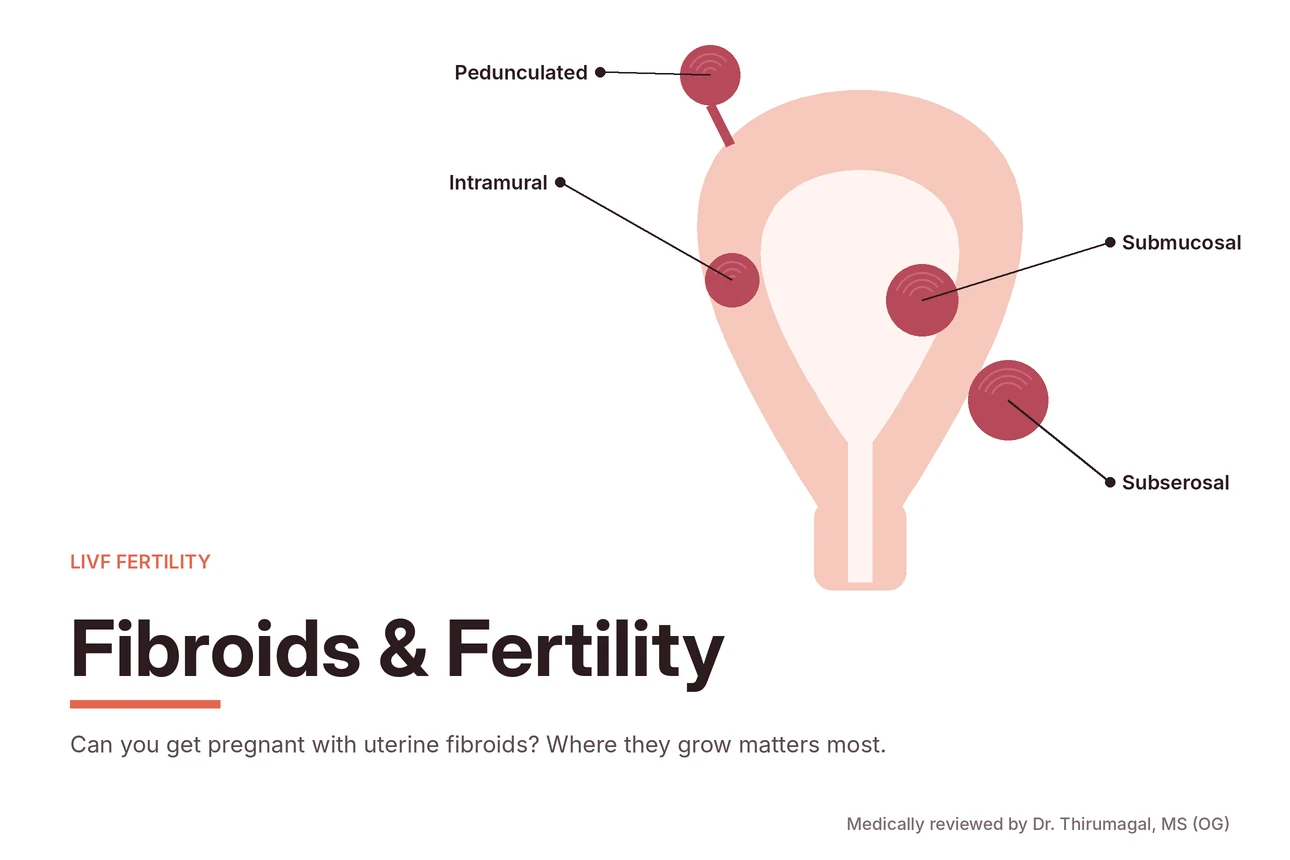
Doctors describe fibroids by where they sit in the wall of the uterus. This matters most for fertility.
| Type | Where it grows | Effect on fertility |
|---|---|---|
| Submucosal | Bulges into the inside of the uterus (the cavity) | Most likely to affect fertility and raise miscarriage risk |
| Intramural | Inside the muscle wall | May affect fertility if large or if it changes the shape of the cavity |
| Subserosal | On the outer surface of the uterus | Usually no effect on fertility |
| Pedunculated | Attached by a stalk, inside or outside | Depends on whether it is inside or outside the cavity |
Doctors also use a numbered system (FIGO types 0 to 8) to describe exactly how deep a fibroid is. Your scan report may mention this.
What are the symptoms of fibroids?
Many women have no symptoms. When they do, symptoms can include:
- Heavy or long periods, sometimes with clots
- Tiredness and breathlessness from anaemia caused by heavy bleeding
- Pelvic pain or pressure, or a feeling of fullness in the lower tummy
- Frequent urination or difficulty emptying the bladder
- Constipation or back pain
- Pain during sex
- Difficulty getting pregnant or repeated miscarriages, in some women
Heavy periods that soak a pad every hour or two, or leave you tired and pale, should always be checked.
How do fibroids affect fertility?
Fibroids can make it harder to conceive or stay pregnant in a few ways:
- Changing the shape of the uterine cavity, which can make it harder for an embryo to implant
- Affecting blood flow to the lining of the uterus
- Blocking the opening of the fallopian tubes in rare cases, when a fibroid sits near them
- Raising the risk of miscarriage, mainly with submucosal fibroids
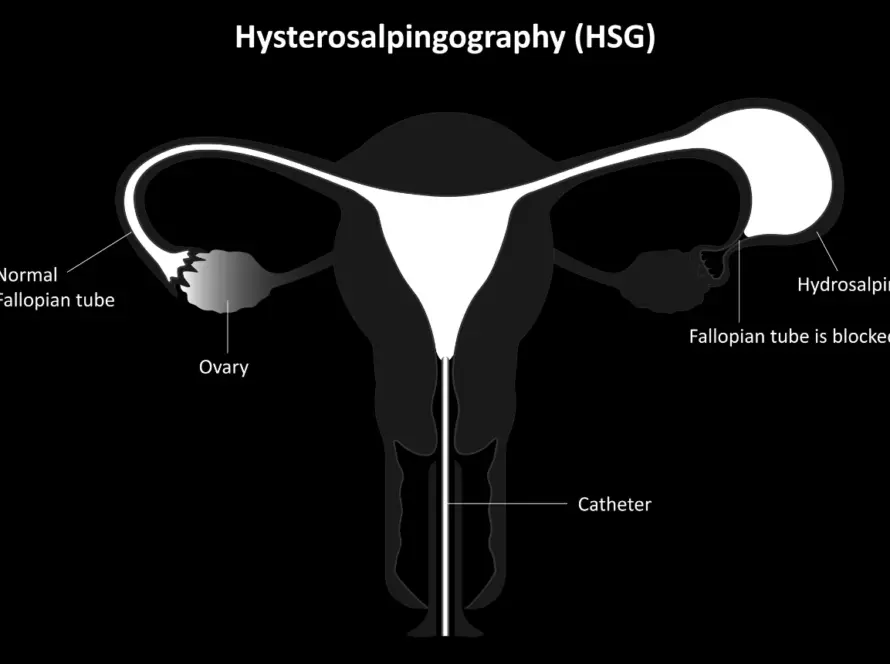
It is important to remember that fibroids are rarely the only reason for infertility. Before deciding on fibroid surgery, doctors usually check the full picture: ovulation, egg reserve (AMH), tubes (HSG) and the partner’s semen analysis.
How are fibroids diagnosed?
- Pelvic examination: a large fibroid can sometimes be felt.
- Transvaginal ultrasound: the main test. It shows the number, size and position of fibroids.
- 3D ultrasound or saline sonography: fluid is placed in the uterus during the scan to see clearly whether a fibroid is pushing into the cavity.
- Hysteroscopy: a thin camera is passed through the cervix to look inside the uterus. Small submucosal fibroids can often be removed in the same sitting.
- MRI: used for multiple or large fibroids, or to plan surgery.
Treatment options for fibroids when you want a baby
Not every fibroid needs treatment. The plan depends on the type, size, symptoms, your age and how long you have been trying.
| Situation | What your doctor may suggest |
|---|---|
| Small subserosal or intramural fibroids, no symptoms, cavity normal | Often no treatment; try to conceive or go ahead with fertility treatment |
| Submucosal fibroid (inside the cavity) | Hysteroscopic myomectomy: removal through the cervix with no cuts on the tummy |
| Large intramural fibroids that distort the cavity or cause symptoms | Laparoscopic (keyhole) or open myomectomy, removing fibroids and keeping the uterus |
| Heavy bleeding while not trying to conceive yet | Medicines to reduce bleeding and treat anaemia; some medicines can shrink fibroids for a short time before surgery |
| Fibroids along with other fertility issues | Fibroid treatment planned together with IUI or IVF |
A few points to know:
- Hormone medicines don’t improve fertility. They can reduce bleeding or shrink fibroids for a while, but you cannot conceive while on most of them, and fibroids grow back once they are stopped.
- Wait time after surgery: after a myomectomy, doctors usually advise waiting about 3 to 6 months before trying to conceive, so the uterus heals well.
- Delivery planning: if the myomectomy was deep in the muscle wall, a planned caesarean may be advised in a future pregnancy.
- Some treatments are not suited for women planning pregnancy, such as uterine artery embolisation in most cases and, of course, hysterectomy. Always mention your pregnancy plans before any fibroid treatment.
Fibroids during pregnancy
Most women with fibroids have a normal pregnancy. Sometimes fibroids can cause:
- Pain in the second trimester, when a fibroid outgrows its blood supply
- Bleeding or a higher chance of early labour
- Breech position or the baby lying in an unusual position, if a fibroid is large or low
- A higher chance of caesarean delivery
Your obstetrician will monitor the fibroid with scans and plan your care.
Frequently asked questions
Can a small fibroid stop pregnancy? Usually not, if it is on the outside or inside the wall of the uterus. A small fibroid inside the cavity (submucosal) can affect implantation even when it is small, and removing it through hysteroscopy is often advised.
Should fibroids be removed before IVF? Submucosal fibroids are usually removed before IVF. Fibroids outside the cavity often do not need removal. Large intramural fibroids are decided case by case, weighing the benefit against surgery, healing time and your age.
Can fibroids turn into cancer? Fibroids are non-cancerous, and becoming cancer is very rare. A fibroid that grows very fast, especially after menopause, should be checked by your doctor.
Can fibroids come back after removal? Yes, new fibroids can grow after a myomectomy, especially in younger women and those who had many fibroids. This is one reason doctors often suggest trying for pregnancy soon after the healing period.
Can diet or home remedies shrink fibroids? No diet or home remedy has been proven to shrink fibroids. A healthy weight, iron-rich food for anaemia and regular exercise are good for overall health, but they do not replace medical treatment.
Is fibroid surgery painful, and how long is recovery? Hysteroscopic removal is usually a day-care procedure with recovery in a day or two. Laparoscopic myomectomy usually needs a short hospital stay and 2 to 3 weeks of recovery. Open surgery takes longer. Your surgeon will guide you.
The bottom line
Fibroids are common, usually harmless, and many women with fibroids conceive without any treatment. What matters most is where the fibroid sits. Fibroids that push into the uterine cavity are the ones most likely to affect fertility, and removing them can help. A good scan and a full fertility check for both partners will show whether your fibroids need treatment before you try for a baby.
Have fibroids and planning a pregnancy? Talk to our fertility team at LIVF Fertility & Women’s Healthcare about your scan and the right next step. Book a consultation at our Perungudi centre, behind World Trade Center, OMR · +91 78787 84079. We see patients from Perungudi, OMR, Thoraipakkam, Kandanchavadi, Velachery and nearby areas.
References
- Practice Committee of the American Society for Reproductive Medicine. Removal of myomas in asymptomatic patients to improve fertility and/or reduce miscarriage rate: a guideline. Fertility and Sterility, 2017.
- Munro MG, Critchley HOD, Fraser IS; FIGO Menstrual Disorders Committee. The two FIGO systems for normal and abnormal uterine bleeding symptoms and classification of causes of abnormal uterine bleeding in the reproductive years: 2018 revisions. International Journal of Gynecology & Obstetrics, 2018.
- Pritts EA, Parker WH, Olive DL. Fibroids and infertility: an updated systematic review of the evidence. Fertility and Sterility, 2009.
- American College of Obstetricians and Gynecologists. Management of Symptomatic Uterine Leiomyomas (Practice Bulletin No. 228), 2021.
- Stewart EA. Uterine fibroids. The Lancet, 2001; and NICE guideline NG88, Heavy menstrual bleeding: assessment and management, updated 2021.
This article is for general information and does not replace advice from your doctor.