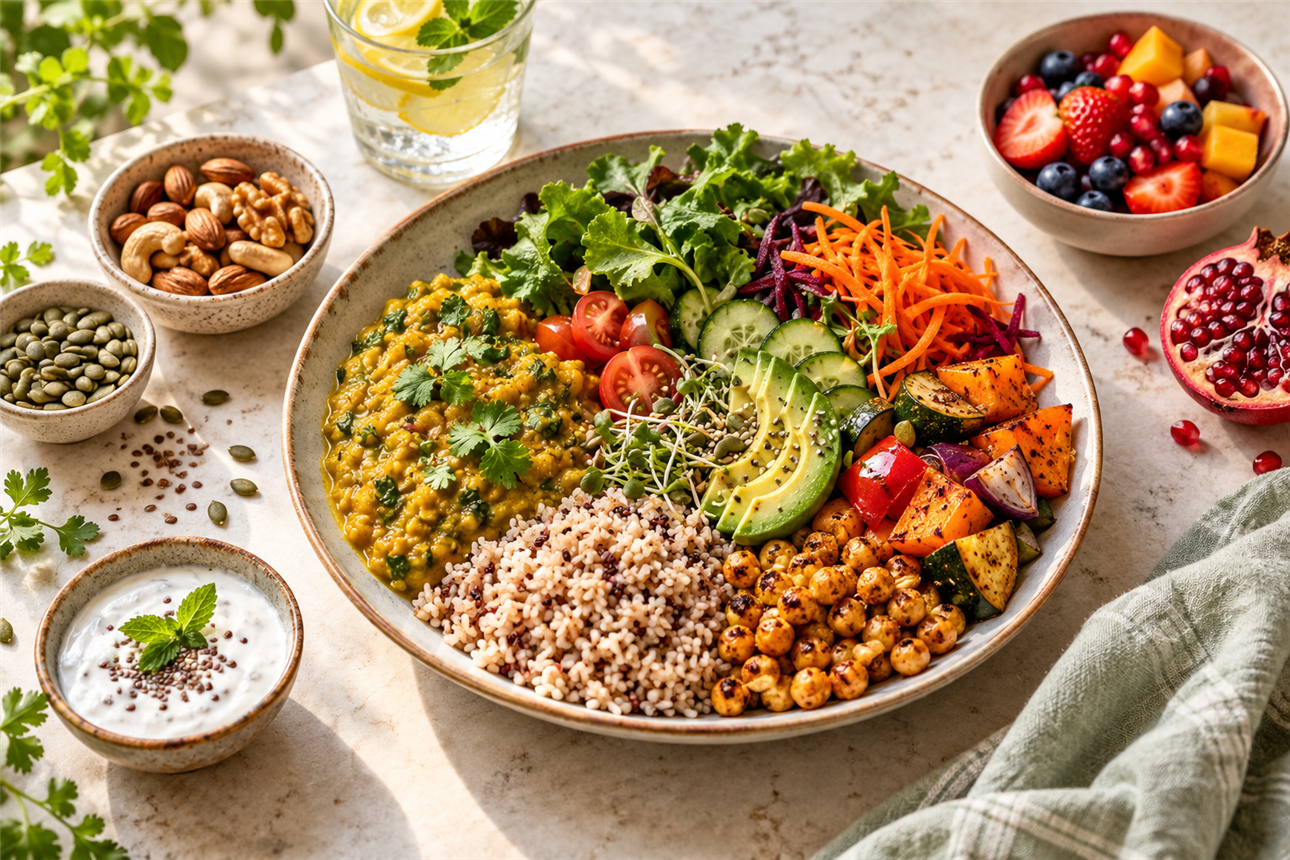
Social media is full of “fertility food” advice: seed cycling, supplement powders, gluten free diets and single foods claimed to improve egg quality overnight. While nutrition can support overall reproductive health, there is no magic food or diet that can guarantee pregnancy.
At LIVF Fertility & Women’s Healthcare, we encourage an evidence informed, balanced approach. The goal is not food restriction. It is building nourishing habits that support your body before and during your fertility journey.
The trend worth following: a balanced, colourful plate
Among the dietary patterns studied in fertility, a Mediterranean style eating pattern has received the most attention. In an Indian context, this can simply mean eating more vegetables, fruits, whole grains, pulses, nuts, seeds, healthy fats and good quality protein, while reducing highly processed foods and sugary drinks.
A fertility supportive plate may include:
- Half the plate: colourful vegetables and greens
- One quarter: whole grains such as brown rice, millet, whole wheat chapati or oats
- One quarter: protein such as dal, chana, rajma, curd, paneer, eggs, fish or lean chicken
- Healthy fats: nuts, seeds, avocado, groundnut oil, mustard oil or olive oil in moderation
Fibre first meals are gaining attention
Fibre helps support digestive health, steadier blood sugar levels and healthy weight management. This is especially relevant for people with PCOS or insulin resistance, where personalised medical and nutrition guidance can be valuable.
Simple ways to add more fibre include choosing whole fruits instead of juice, adding vegetables to every meal, replacing refined grains with whole grains more often, and including dals, beans and sprouts regularly.
Try these easy swaps:
- White bread breakfast: vegetable oats, millet dosa or whole wheat toast with egg or paneer
- Packaged snack: roasted chana, fruit with nuts, or curd with seeds
- Sugary drink: water, buttermilk or unsweetened lemon water
- Refined rice every day: alternate with hand pounded rice, brown rice, millets or whole wheat rotis
Protein at breakfast: a practical habit
Starting the day with a protein rich breakfast can help you stay satisfied and avoid frequent sugar cravings. Options can include idli with sambar, vegetable omelette with whole wheat toast, moong chilla, curd with fruit and nuts, or paneer bhurji with roti.
Both partners matter in fertility care. A nutritious eating pattern, regular movement, adequate sleep and avoiding smoking or alcohol can support overall reproductive health for men as well as women.
What about seeds, supplements and “detox” diets?
Seeds such as sesame, pumpkin, sunflower and flax can be part of a healthy diet, but they are not a treatment for infertility. Likewise, supplements including folic acid, vitamin D, iron, myo inositol or antioxidants should be taken only when recommended by your fertility specialist based on your health needs and test results.
Extreme detoxes, crash diets, unnecessary gluten free plans and cutting out dairy without a medical reason can make it harder to meet your nutrient needs. Fertility treatment is already emotionally demanding, so food should support you, not become another source of stress.
A simple one day fertility friendly meal idea
Breakfast: Vegetable omelette or moong chilla with fruit
Mid morning: Guava, orange or apple with a handful of nuts
Lunch: Brown rice or chapati, dal, vegetable curry, salad and curd
Evening: Buttermilk with roasted chana or sprouts chaat
Dinner: Millet dosa or chapati with paneer, fish or chicken and vegetables
This is only a general example. Your ideal plan may differ depending on PCOS, thyroid concerns, diabetes, endometriosis, weight goals, food preferences or the treatment stage you are in.
The LIVF approach: personalised care beyond the plate
Nutrition is one part of a broader fertility plan. At LIVF Fertility & Women’s Healthcare, our team considers your medical history, diagnostic results, lifestyle and treatment goals to guide you with compassion and clarity.
If you have been trying to conceive for 12 months, or for 6 months if you are over 35, consider speaking with a fertility specialist. You do not have to navigate the journey alone.
Book a consultation with LIVF Fertility & Women’s Healthcare in Chennai to understand the right next step for you.