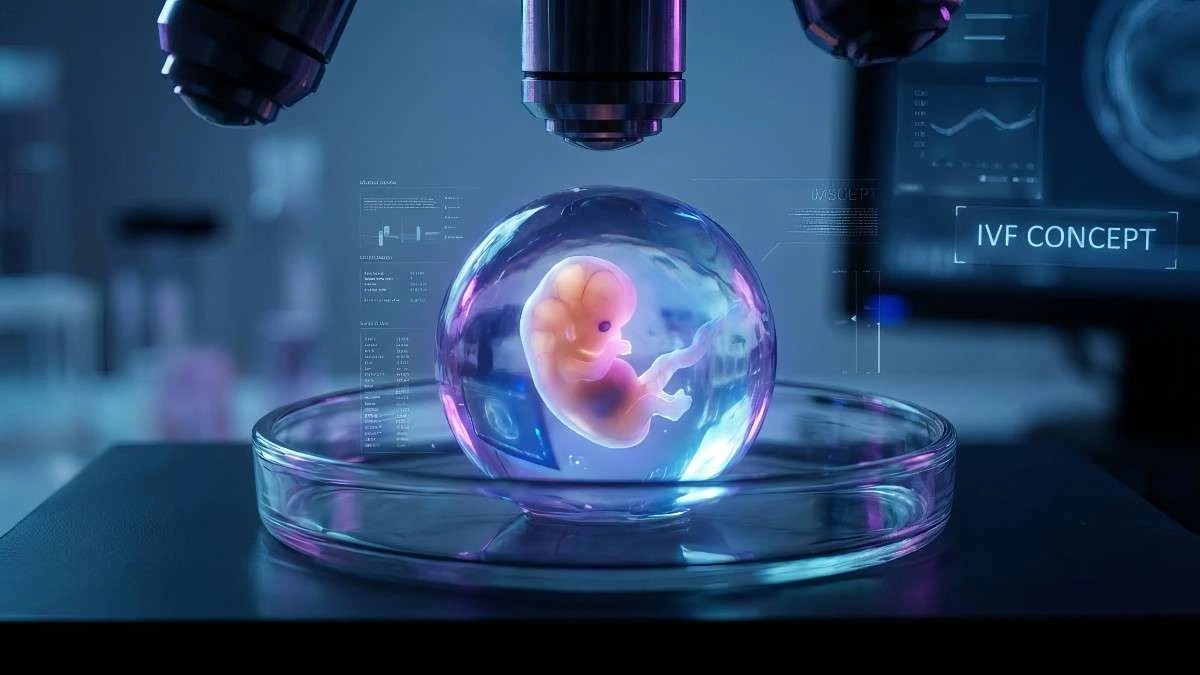
For couples navigating the emotional journey of infertility, IVF can bring a mix of hope, anticipation and uncertainty. While reproductive medicine has advanced significantly over the years, one important question remains at the heart of every IVF cycle: which embryo has the best potential for transfer?
Traditionally, embryo selection has relied largely on visual assessment by experienced embryologists. Today, advances in artificial intelligence (AI) and time-lapse technology are adding another layer of information to this process.
At LIVF Fertility, we believe that advanced technology should support personalised, evidence-based fertility care. Let’s look at how AI-based embryo assessment is changing modern IVF.
The Challenge of Traditional Embryo Selection
After fertilisation, embryos are carefully cultured and monitored as they develop. Embryologists assess several characteristics to understand their developmental progress and quality, including:
- The number and appearance of cells
- The pattern and timing of cell division
- The development of the inner cell mass
- The appearance of the trophectoderm
These assessments are performed by highly trained embryologists. However, conventional embryo grading is based primarily on observations made at specific points in time. This means it may not capture every detail of the embryo’s developmental journey.
How AI Supports Embryo Assessment
AI-based embryo assessment uses machine learning and image analysis to study embryo development in greater detail.
Rather than replacing embryologists, AI can act as an additional decision-support tool, analysing developmental patterns and helping identify embryos that may have stronger potential for implantation.
1. Continuous Monitoring Through Time-Lapse Imaging
Time-lapse incubators can capture images of embryos throughout their development while maintaining a stable culture environment.
This allows embryologists to observe developmental patterns without repeatedly removing embryos from the incubator for manual assessment.
2. Analysing Developmental Patterns
AI systems can analyse large volumes of image-based data and identify developmental events, such as:
- The timing of cell divisions
- Patterns of embryo development
- Abnormal or unusual developmental events
- Morphological changes over time
This provides additional information beyond a single static observation.
3. Supporting Embryo Prioritisation
Based on the developmental information analysed, AI-based systems may help embryologists prioritise embryos for transfer.
It is important to remember that AI-generated assessments are decision-support tools, not guarantees of pregnancy or live birth. The final treatment decision is made by the fertility specialist and embryology team based on the complete clinical picture.
Potential Benefits of AI in IVF
More Objective Assessment
AI can provide a standardised analysis of embryo development, helping reduce variations that may occur when assessments rely solely on visual interpretation.
Better Use of Developmental Data
Time-lapse imaging generates a large amount of information. AI can help analyse these complex developmental patterns efficiently and identify features that may be relevant to embryo selection.
Supporting Single Embryo Transfer
When clinically appropriate, selecting and transferring a single embryo can help reduce the risks associated with multiple pregnancies.
Advanced embryo assessment tools may support the goal of single embryo transfer by providing additional information to guide embryo prioritisation.
Potentially Reducing Time to Pregnancy
By helping fertility teams prioritise embryos based on available developmental data, AI may support more informed treatment decisions. However, outcomes vary between individuals and depend on several factors, including age, embryo quality, uterine health and underlying fertility conditions.
Is AI-Based Embryo Selection Non-Invasive?
AI-based embryo assessment generally analyses images and developmental data without physically handling or biopsying the embryo.
This makes it a non-invasive method of evaluating developmental patterns.
However, it is different from genetic testing. Preimplantation Genetic Testing (PGT) examines genetic or chromosomal information, while AI-based embryo assessment analyses visual and developmental data. Depending on the clinical situation, your fertility specialist may recommend one or more approaches.
AI and Human Expertise: Working Together
AI does not replace the expertise of an embryologist or fertility specialist.
Embryo selection involves many clinical considerations, and AI is best viewed as an additional tool that can provide data-driven insights. The embryology and clinical teams interpret this information alongside other factors to create an appropriate treatment plan.
The combination of:
- Experienced embryologists
- Advanced laboratory technology
- AI-assisted analysis
- Personalised fertility care
can help support a more informed approach to IVF treatment.
Advanced IVF Care at LIVF Fertility
Every fertility journey is unique, and there is no single technology or treatment approach that is right for everyone.
At LIVF Fertility, advanced reproductive technologies are considered as part of a personalised approach to fertility care. Our team focuses on combining clinical expertise, modern laboratory practices and individualised treatment planning to support patients throughout their IVF journey.
If you are considering IVF and want to understand the technologies that may be relevant to your treatment, speaking with a fertility specialist can help you explore the options available for your individual situation.
Because every journey towards parenthood deserves informed decisions, personalised care and the right support at every step.